


SHENZHEN, China — November 20, 2026 — As retail chains, live-event producers, transportation hubs, and corporate campuses recalibrate capital expenditures heading into 2027, procurement priorities across the commercial LED display sector are undergoing a structural shift. Rather than evaluating large-format digital signage solely on upfront panel pricing or headline pixel pitch, commercial buyers are increasingly focusing on total cost of ownership (TCO), modular serviceability, energy consumption, and direct factory supply transparency—trends actively shaping manufacturing workflows at suppliers such as LEDScreenFactory.com.
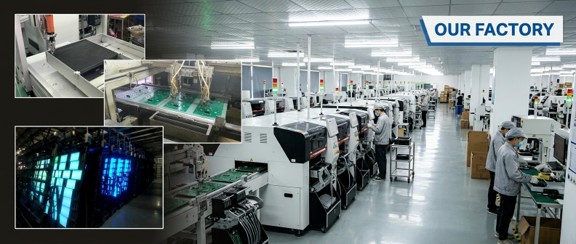
For years, commercial LED screen deployment followed a multi-layered distribution model in which hardware passed through regional importers, wholesale brokers, and local contractors before reaching the end facility. While traditional intermediaries provided on-site coordination, layered markups often inflated project budgets and obscured component-level specifications such as driver IC refresh rates, power supply redundancy, and LED lamp binning consistency. In an environment where enterprise buyers face tighter budget scrutiny, direct-to-factory procurement models have gained traction among experienced AV integrators, rental staging companies, and multi-site commercial operators seeking clearer specification accountability and tighter cost control.
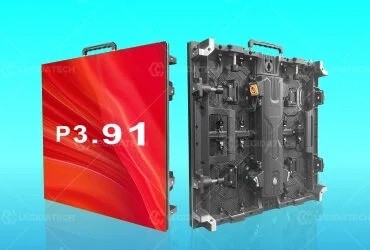
A major catalyst behind this shift is the standardization of modular cabinet architecture. Modern indoor LED screen cabinets, outdoor perimeter billboards, and lightweight LED screens for rental business fleets are increasingly engineered around die-cast aluminum frames, standardized magnetic front-service modules, and interchangeable power-and-data hub boards. For facility operators, front-access maintenance eliminates the need for bulky rear service corridors, reducing structural steel requirements and freeing valuable floor space in retail flagships, broadcast studios, and control rooms. For live-event production providers, uniform cabinet dimensions and quick-lock mechanical tolerances translate directly into faster rigging turnaround times and lower labor expenses per show.
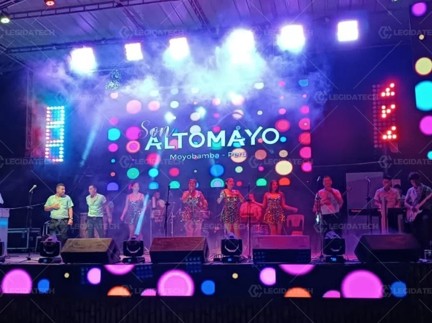
Energy efficiency and thermal management have also moved to the center of commercial procurement criteria. Large outdoor digital out-of-home (DOOH) installations and high-brightness storefront displays operate continuously under demanding ambient conditions, where electricity consumption and cooling loads represent recurring operational expenses over a five-to-eight-year service lifecycle. Advances in common-cathode power architecture, high-efficiency constant-current driver ICs, and passive aluminum heat dissipation allow newer commercial cabinets to maintain high peak luminance while reducing power draw and surface operating temperatures. Lower thermal stress not only cuts utility outlays for property owners, it also slows phosphor and diode degradation, preserving color uniformity across multi-panel video walls.
At the same time, application diversification is pushing manufacturers to refine specialized product lines rather than relying on one-size-fits-all screens. In corporate lobbies, hospitality venues, and architectural facades, transparent LED mesh and flexible curved modules enable designers to integrate dynamic visuals without blocking natural daylight or altering building load profiles. Meanwhile, stadiums, transit concourses, and municipal command centers continue to prioritize high-ingress-protection (IP65 and above) outdoor enclosures, high refresh rates above 3,840Hz for flicker-free broadcast capture, and redundant signal loops that prevent single-point failures during live broadcasts.
“Commercial display buyers today ask much sharper operational questions before approving a purchase order,” said a spokesperson for LEDScreenFactory.com. “Beyond brightness and resolution, integrators and project owners want clarity on batch-to-batch color calibration, spare module availability, power consumption under real-world content loads, and realistic production lead times from the factory floor.”
Supply-chain predictability remains an equally decisive factor for cross-border commercial projects. Custom screen dimensions, curved corner assemblies, and region-specific voltage certifications require close pre-production engineering review—including CAD structural drawings, power distribution schematics, and pre-shipment aging tests—before crating and sea or air freight dispatch. Manufacturers that combine automated surface-mount technology (SMT) production lines with documented 72-hour continuous burn-in testing and standardized export flight-case or wooden-crate packaging help project contractors avoid costly on-site commissioning delays.
Digital discovery and technical documentation have likewise reshaped how international buyers source LED hardware. Instead of relying exclusively on annual trade shows, procurement managers increasingly evaluate factories through detailed engineering spec sheets, verified project case documentation, and direct remote video inspections of production and calibration benches. Clear technical communication around viewing distances, structural load limits, and control-system compatibility—such as NovaStar and Brompton processing ecosystems—has become essential to winning repeat commercial orders.
Looking ahead to 2027, industry observers expect steady demand across retail modernization, experiential entertainment, sports venue upgrades, and smart-city infrastructure, even as buyers remain selective on capital outlay. Manufacturers capable of pairing precision modular engineering with transparent factory-direct fulfillment and long-term spare-part support are positioned to capture sustainable share in an increasingly disciplined global display market.
About LEDScreenFactory.com
LEDScreenFactory.com is a commercial LED screen manufacturer and factory-direct supplier providing indoor fine-pitch video walls, outdoor advertising screens, rental stage displays, transparent LED solutions, and custom engineering support for global integrators and commercial project buyers.
Media Contact:
Company Name: LEGIDATECH
Official Webstie: https://ledscreenfactory.com/
Email: legidatechled@gmail.com
Tel:+86-185-69492693
Address: 2nd Industrial Park, NanGang, Nanshan District, Shenzhen, GuangDong Province, China.